Allegra (Fexofenadine) is a preferred choice for many allergy sufferers because it is a true “non-drowsy” antihistamine. Unlike other medications that can leave you feeling foggy, Allegra is designed to keep you alert. Following this Allegra dosage guide for adults and children will ensure you get the maximum benefit from the medication.
Allegra Dosage for Adults (Ages 12 and Older)
For adults and teenagers, Allegra is typically taken once a day for 24-hour symptom control.
- Standard Adult Dose: 180 mg (one tablet) once daily with water.
- Alternative Dose: 60 mg twice daily (every 12 hours) if recommended by a physician.
- Maximum Dose: Do not exceed 180 mg in a 24-hour period.
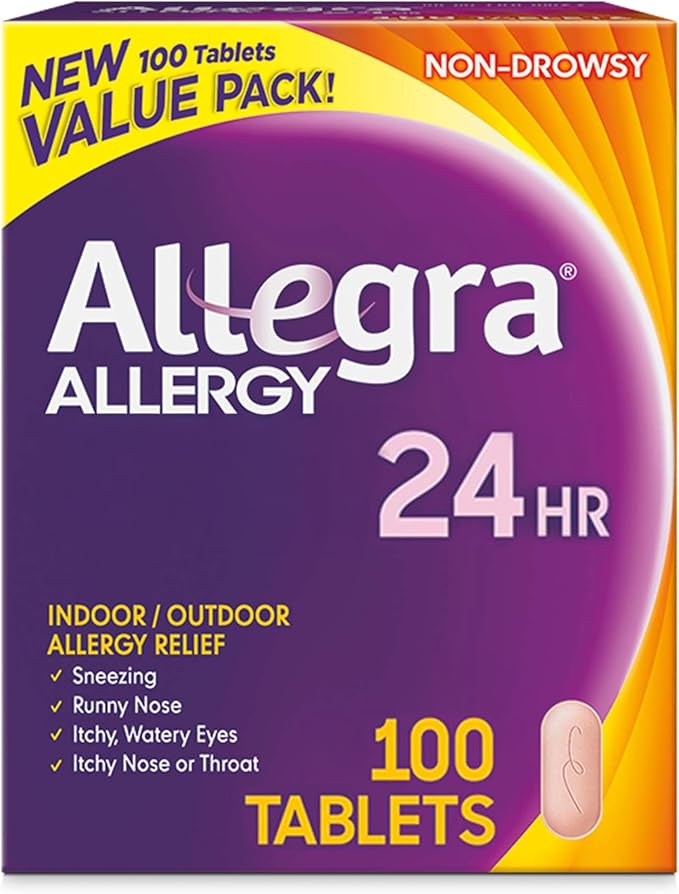
Allegra Adult Non-Drowsy 24-Hour Tablets, 180 mg
Allegra Dosage for Children (Liquid & Orally Disintegrating Tablets)
Dosing for children is usually based on a 12-hour schedule to maintain consistent relief.
| Age Group | Dosage | Frequency |
| 6 to 11 Years | 30 mg (tablet or 5mL liquid) | Every 12 hours |
| 2 to 5 Years | 30 mg (5mL liquid) | Every 12 hours |
| Under 2 Years | Consult a Pediatrician | Not recommended for OTC use |
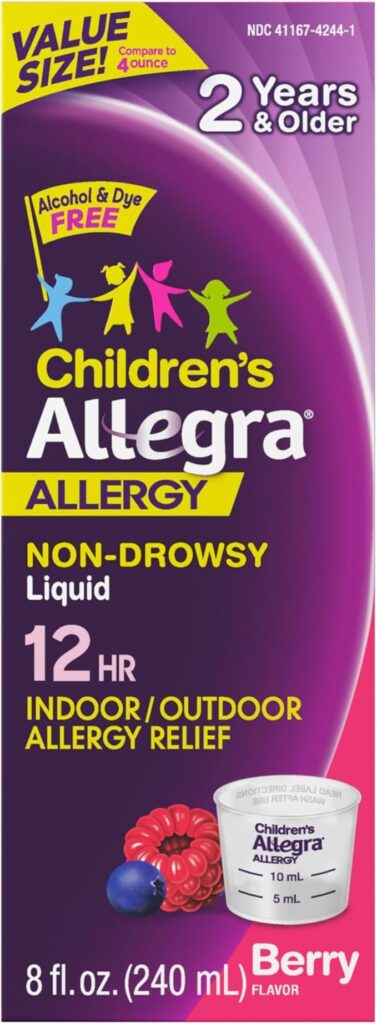
Allegra Children’s 12-Hour Allergy Relief Liquid
Antihistamine Nasal Spray: Astepro (Azelastine)
If oral tablets are not enough to clear your nasal passages, you can combine them with an antihistamine nasal spray. In the U.S., Astepro is the leading OTC option for fast-acting nasal relief.
| Age Group | Dosage (Sprays per Nostril) | Frequency |
| Adults (12+ years) | 1 or 2 sprays | Twice daily |
| Children (6 to 11 years) | 1 spray | Twice daily |
Pharmacist’s Tip: To avoid a bitter taste in your throat, keep your head level or tilted slightly forward while spraying. Do not tilt your head back.
The “Grapefruit Rule”: A Pharmacist’s Critical Warning
This is the most important part of any Allegra dosage guide for adults and children.
“Do NOT take Allegra with fruit juices (Orange, Grapefruit, or Apple). Fruit juices contain compounds that block the transporters your body needs to absorb fexofenadine. Taking Allegra with juice can reduce its effectiveness by up to 40%. Always take your dose with plain water.”
Common Symptoms Treated by Allegra Allegra is highly effective at managing a variety of seasonal and indoor allergy symptoms. By following the correct Allegra Dosage Guide for Adults and Children, you can find relief from:
- Sneezing: Reduces the urge to sneeze repeatedly.
- Runny Nose: Dries up nasal discharge without causing excessive dryness in the throat.
- Itchy/Watery Eyes: Blocks the histamine response that leads to red, irritated eyes.
- Itchy Nose or Throat: Calms the irritation often caused by high pollen counts or pet dander.
Safety and Side Effects
- Non-Drowsy: Allegra does not cross the blood-brain barrier easily, making it one of the least sedating antihistamines available.
- Kidney Disease: Patients with decreased kidney function should consult a doctor, as they may require a different dosing schedule (starting with 60 mg once daily).
- Pregnancy: Always talk to your OB-GYN before starting Allegra.
About the Author: Dr. Marco, PharmD
Dr. Marco is a licensed clinical pharmacist specializing in patient education and medication management. With years of experience in the pharmaceutical industry, he focuses on providing clear, evidence-based guidance on over-the-counter (OTC) treatments and natural supplements. His mission is to bridge the gap between complex medical data and practical, everyday health solutions for patients worldwide.