
Following the correct Benadryl dosage guide for adults is essential to avoid excessive sedation and ensure effective relief from hives or allergic reactions.
Benadryl (Diphenhydramine) is a first-generation antihistamine used to treat allergy symptoms, hives, and sometimes insomnia. Because it can cause significant drowsiness, finding the precise Benadryl dosage guide for your age and weight is critical for safety. In this guide, we provide easy-to-read charts for tablets, liquids, and chewables.
Benadryl Dosage for Adults (Ages 12 and Older)
For most adults, the standard dose is 25mg to 50mg. However, you should not exceed 300mg in a 24-hour period. Specifically, it is recommended to start with a lower dose to assess your tolerance to sedation.
| Form | Standard Dose | Frequency |
| Oral Tablet/Capsule (25mg) | 1 to 2 Tablets | Every 4 to 6 hours |
| Liqui-Gels (25mg) | 1 to 2 Gels | Every 4 to 6 hours |
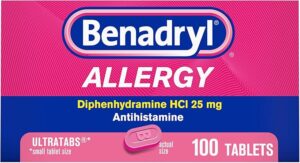
Benadryl 100 Tablets
Consequently, if you are using Benadryl as a sleep aid, take the dose 30 minutes before bedtime. Furthermore, avoid alcohol while taking this medication as it increases the sedative effect.
Benadryl Dosage for Children (Ages 6 to 11)
Regarding pediatric use, Benadryl is available in Children’s Liquid or Chewable forms. Always use the specific measuring cup provided with the product to ensure accuracy.
| Weight (lbs) | Age | Liquid (12.5mg/5mL) | Chewables (12.5mg) |
| 20-24 lbs | 2-3 Years | Consult Doctor | Consult Doctor |
| 25-37 lbs | 4-5 Years | Consult Doctor | Consult Doctor |
| 38-49 lbs | 6-11 Years | 5 mL to 10 mL | 1 to 2 Tablets |
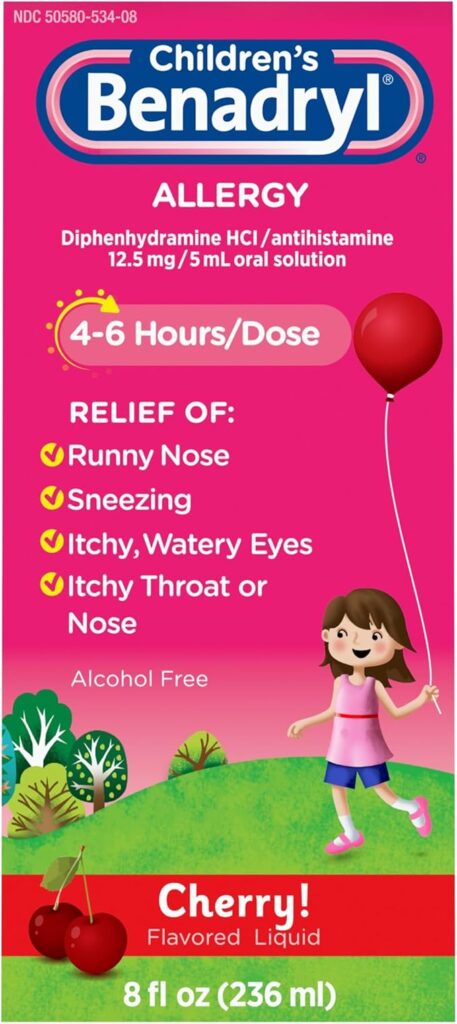
Benadryl Children’s Allergy Relief Liquid Medicine with Diphenhydramine HCl Antihistamine for Kids, Effective Allergy Relief
Note for Infants: Do not use Benadryl for children under 2 years of age unless specifically directed by a pediatrician. Instead, for younger children, doctors often prefer second-generation antihistamines like Claritin or Zyrtec.
Safety and Side Effects
To ensure safety, you must be aware that Benadryl can cause a “paradoxical reaction” in some children, leading to hyperactivity instead of drowsiness. In addition, elderly patients should use caution due to an increased risk of confusion and falls.
“When it comes to pediatric medications like Benadryl, accuracy is not just a suggestion—it’s a requirement. As a pharmacist, my priority is ensuring that every parent feels confident and informed about the safety of their child’s dosage.” — Dr. Marco, PharmD